Economic Life Along the Charles
As we have seen, the Charles River served vital functions in the economic life of Native Americans. So too for European settlers in Massachusetts. From the first farmers constructing saw mills to cut lumber in the seventeenth century, into the earliest days of the industrial revolution in the nineteenth century, the Charles River drove the economic development of New England.
Early Dams and Mills along the River
European settlers constructed mills such as this one to harness the energy of the Charles to help with the labor of clearing land and building houses.
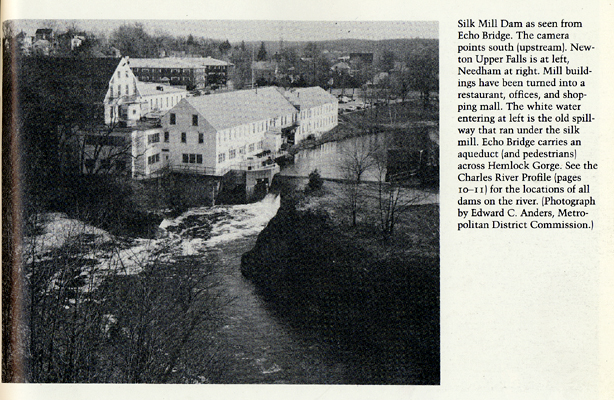
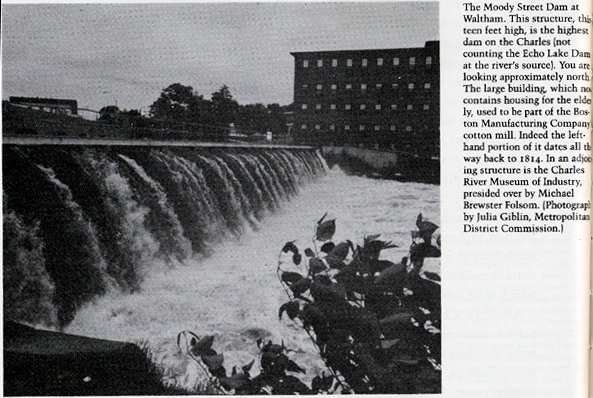
New Englanders also built dams, such as that which currently operates by the Museum of Science, to shape and control the Charles. Here's an image of one such dam along the river in Waltham.
The Industrial Power of the Charles
The textile mills of Lowell, Massachusetts are widely heralded for beginning American industrialization. But the Lowell model developed years earlier in Waltham, Massachusetts, powered by the Charles River. The Charles River Museum of Industry, along the Charles in Waltham and immediately adjacent to the Moody Street Dam, tells some of this story. This Quicktime video clip , from their web-site, offers a 360 degree display of one room of the museum.