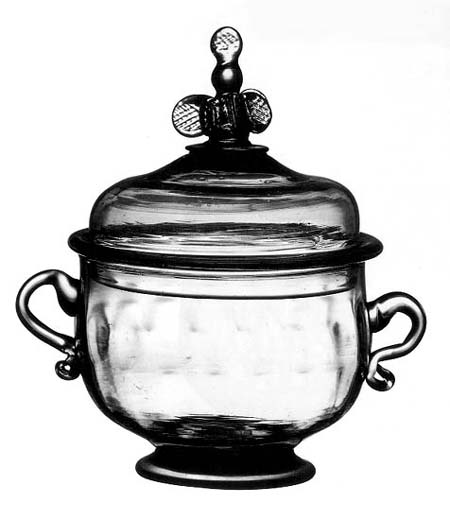
Glass sugar box
Wistarburgh Glassworks of Caspar and Richard Wistar, NJ
1739-77
West Indian sugar became widely available in Europe in the seventeenth century, and by 1700 it was used to cure meat, preserve fruits, and sweeten dessert foods and beverages, including wine, punches, tea, coffee and chocolate. Although North American maple sugar was readily accessible, most colonial housewives who could opted to buy imported sugar. There were as many as nine grades of sugar, ranging from coarse brown muscovado sugar, to ordinary yellow refined sugar, to highly refined white sugar. Prices varied accordingly. Refined sugar was wrapped in paper and sold as a loaf which could be cut into lumps or powdered. An 18th century traveller to the English colonies remarked that "the kinds of sugar they use marks generally poverty or richness." Similarly, the sugar container, whether of silver or pewter, porcelain or earthenware, cut class or common green glass, reflected the weath of the household.